Tuesday, April 29, 2008

Post Post Modern Music: The Kills

This is a group I found on a hip blog last week. The song's called U R A Fever.

In an interview, the rock duo's Alison Mosshart said something interesting about the power of the internet that piqued my interest. It seems that blogs have developed a real power in spreading the word about good music and that is changing how the industry works:

This is a real moment of honesty and truth here because there was a moment in time, very recently, when big companies could market something--it could market the hell out of something--and then that would be huge. It would be famous because it was forced on you all the time.

I think now that music is typically free kids can make their own decisions. Everyone's calling it a crisis, but I don't.

Spoken like a true rocker. Anway, one comment on YouTube said, "This song is so sexy." Couldn't agree more...

U R A Fever - The Kills

Monday, April 28, 2008

RIP Blogging?

Consistent posting is tough, and blogs may come and go, but the medium of blogging is here to stay.

I’ve heard that the key to building up an audience for your blog is posting regularly. After all, faithful readers expect something fresh for their eyes to feast on when they point and click to your page. A few consecutive visits revealing the same “Merry Christmas Everyone!” post, and people will simply stop coming, favouring blogs that have managed to at least break into the new year.

But diligent posting is hard! There’s the issue of time. Unless you’re unemployed or (through some perversion of luck) you blog for a living, finding time to craft a fresh post between work, school, meals, homework, walking the dog, playing with the kids, etc. etc. isn’t always easy. Then, there’s the issue of issues. Sometimes your mind is bursting with ideas, opinions, rants and observations. (For me, it was the eruption of the Tibet turmoil a few weeks ago.) Other times though, your mind is an empty vessel, containing nothing remotely of interest. And what do you do then?

With this in mind, I read an obituary of sorts for blogging. It’s called “THE DEATH OF PERSONAL BLOGS” by Emily Gould and although provocative in its title, it’s really a personal reflection on how Gould’s blog and some of her favourites have lived and died since their inception in the late nineties or early 2000’s (can I say ‘turn of the century’?):
Checking in on the sites I used to frequent five years ago during the golden age of the blog reveals an online graveyard. Many of my old virtual friends’ last few posts follow the same sad pattern — the initial spate of “sorry I haven’t posted in so long”s followed by the inevitable “it’s over, but check out what I’m doing at [corporate blog]!”

What she’s really getting at is the serious tenacity required to maintain a blog for longer than a few months. Not so much that blogging is dying out, but that the medium has a very high attrition rate. Yet that’s what I think is key to why blogging will endure: there's always more.

Humans are social creatures and love to communicate. The flowering of communication means is testament to that: letters, telegrams, phones, faxes, televisions, email, instant messaging, text messaging… We can’t get enough of it. And rather than ditching an old medium for a new one, the old ones remain in our communication tool belt for use in different contexts.

Blogs are unique in that in they’re not only a way to share information, but they have this amazing democratizing effect on information. Suddenly, knowledge and info isn’t dictated through newspapers, TV and your small circle of word-of-mouth, but becomes a vast network with no boundaries and fitting every niche imaginable.

It’s a beautiful thing. And even if this blog doesn’t survive it’s first year, another will take it’s place. And when that fails, others will take the torch, because people will never run out of things to say and will always find a hungry audience ready to listen.

Saturday, April 19, 2008

Hiatus

I am currently busy with life, but promise (cross my heart, yada, yada...) to return on Monday, April 28, 2008.

Monday, April 7, 2008

Clay To Keep the Doctor Away


A small meteor crashes down in a farmer's field. A group of people go to retrieve the space rock, but find a high tech box inscribed with heiroglyphics in its place. They open the box and discover several samples of pasty substance, each with a different hue--light green, beige, blue, etc.--but all with the consistency of peanut butter.

Scientists take this alien gift and carefully examine it under a microscope. They are deeply impressed by what they see. "Highly sophisticated bio-engineering," they declare.

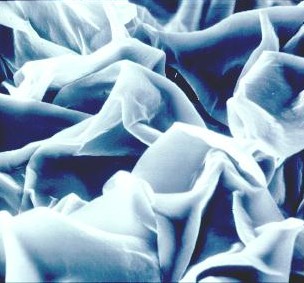
The micro-structure contains three layers, the first having a crystalline structure like salt or diamond. Clinging to this like a magnet is a mesh of minerals, including potassium. And to top it off, a sprinkle of organic molecules, each sample containing combinations as unique as snowflakes in terms of type and arrangement of these molecules. "Only a super-intelligent race could have created this," announce the stunned scientists.

But what does it do?


After running a 1000 different tests on it, they discover it kills bacteria. Not just any bacteria but the super-bugs like MRSA, the one stalking hospitals, schools and other public places, causing ugly pus-leaking sores, and resistent of most antibiotics doctors throw at it.

The people of the Earth rejoice. Yet, questions remain. The scientists can see what it looks like, but can't quite figure out how the substance is doing the bacteria-fighting. And they can only guess how the brilliant alien race managed to sythesize such a complex compound.

Well, the substance I've just described is actually simple old clay, not a high-tech concoction derived from ET. It's been used since Roman times for treating nausea and cuts and after years of getting the cold shoulder from modern medicine (because of "lack of research") it is now getting the respect it deserves.

Indeed, it's shown encouraging results against highly drug-resistant strains like MRSA and a flesh eating bacteria called "Buruli ulcer" that has ravaged parts of Africa. But just as descibed in my little story, scientists don't know what the clay is actually doing. Some of those unique organic molecules could be poisonous to the bacteria. Maybe it has somrthing to do with it's acidity...

No one knows.

But the real question is will the medical community in Canada and the US will embrace the novel idea of using simple clay to treat disease? Or will they hide behind medical orthodoxy and dismiss clay as just a fringe therapy, not worthy of serious attention?

---
Picture: a micrograph of clay, from this site.